


Quack Bag: Duck Mafia
4.3303.00 Reviews
App Specs
- Version
- 1.232.267
- Updated On
- License
- Free
- Downloads
- 1,000,000+
- Developer
- NOODLE GAMES LIMITED
- Categories
- Arcade
- Platform
- Android
Screenshots
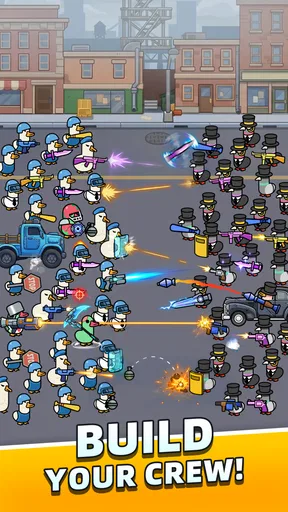
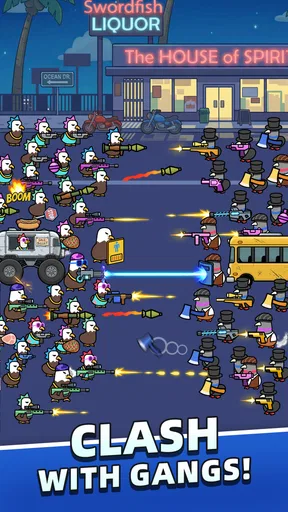
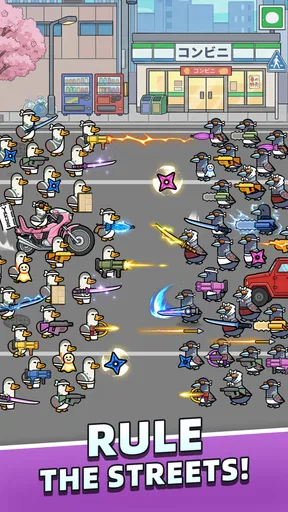

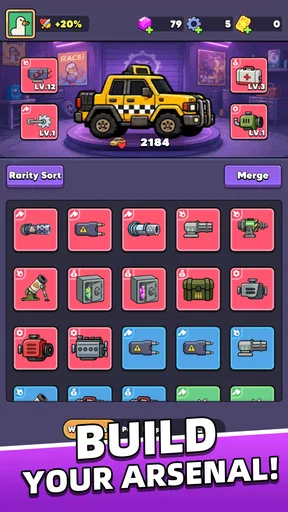
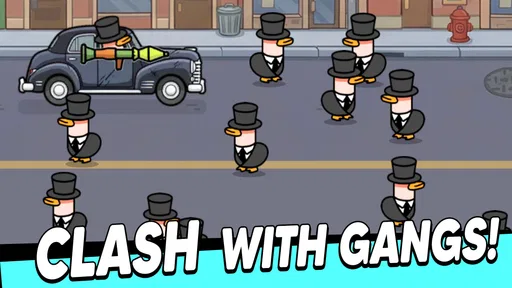

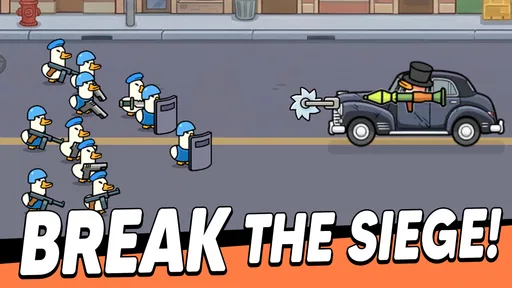
 Analysis by AppCompare
I did not expect a game called Quack Bag: Duck Mafia to make such a strong first impression, but its central idea is immediately understandable: build a bag, combine weapons, and send your duck into chaotic street fights. That clarity matters. I can open it when I have only a few minutes, understand what I should be doing almost at once, and start making decisions without sitting through a long tutorial or learning a complicated control scheme.
What makes the game appealing is the contrast between its silly theme and its surprisingly purposeful arcade loop. The duck-mafia setting gives the action personality, while the bag-and-merge concept gives each short attempt something to think about. I am not simply tapping until a battle ends; I am also deciding how to arrange and improve the tools available to me. That small layer of planning is what separates it from a completely disposable tap game.
Why the first few sessions work so well
The opening appeal comes from how quickly the game communicates its priorities. I can see that the bag is the center of progression, weapons are valuable when combined intelligently, and battles are the immediate test of those choices. The store summary describes the experience in a few words, but playing it reveals the important detail: the fun is not only in winning a street battle. It is in preparing for the next one with a better understanding of what my limited space and available weapons can accomplish.
That makes it a natural fit for people who enjoy arcade games with light strategy rather than long-form role-playing systems. The action has enough structure to keep me involved, but it does not demand the kind of concentration I would give a competitive multiplayer game. I can play while waiting for an appointment, during a short break, or at the end of the day when I want something active without committing to a large adventure.
The presentation also benefits from the unusual theme. Duck characters and mafia-style street battles create a playful tone that prevents the merge mechanics from feeling too dry. I would not call the game a story-driven experience, and I would not install it for deep character writing. Its personality comes from the visual premise and the absurdity of watching a duck-led battle revolve around a carefully managed bag of weapons.
One useful early habit is to resist treating every weapon as an immediate upgrade. The temptation is to merge as soon as two compatible items appear, but the better choice can depend on what I expect to need in the next encounter. Keeping the bag readable is often more valuable than chasing a single stronger item. This is one of the first places where the game becomes more interesting than its cheerful appearance suggests.
For a free game, the entry barrier is low. It is suitable for Everyone, and the minimum operating system is Android 6.0, so it is not aimed only at people with recent phones. The current version is 1.172.260, which is useful to know when checking compatibility before installing. The game comes from NOODLE GAMES LIMITED and has already passed the stage where it feels like an obscure experiment, with over a million installs and a 4.3 average from around 7.8 thousand ratings.
Worth Reading Before You Choose

EA SPORTS FC Mobile 26 Is a Bigger Football Game, but It Takes Time

Flipboard Shows What News Apps Must Do Beyond the Feed

Switching to Android Auto Means Rethinking Your Driving Routine

Google Calendar Makes a Crowded Week Easier to Manage

Ludo King Makes the Most of the Minutes Between Plans

Baby Panda World Brings Quick Play to Modern Phones, but Its Game Library Feels Busy
A loop built around small decisions
The most satisfying part of a run is the relationship between preparation and result. I arrange what I have, enter a battle, see whether the choices hold up, and then return to the bag with new information. That creates a compact feedback loop: the battle gives me a reason to care about organization, while the organization gives the next battle a little more meaning.
This is also where the game differs from a standard endless tapper. In a pure reflex arcade title, my attention is mostly on timing or movement. Here, the pressure is partly mental. I need to notice what is taking up space, what can be improved, and whether a short-term boost is worth making the bag less flexible. The decisions are not overwhelming, but they are enough to make a five-minute session feel like I actually played rather than merely watched numbers rise.
I found that the best approach is to make one deliberate adjustment at a time. If I merge everything immediately, it becomes harder to understand which decision helped and which one weakened the setup. A slower rhythm also makes failures more useful. When a battle goes badly, I can look back at the bag and identify whether I overcommitted to one weapon, left too much clutter, or improved the wrong item at the wrong moment.
That kind of self-correction gives the game a modest but real learning curve. It is not a demanding strategy title, yet it rewards paying attention. Someone who plays randomly can still enjoy the spectacle, while someone who likes optimizing a small system can extract more from the same encounters.
How well it handles interruptions
Short-session games live or die by how easy they are to leave and revisit. In my experience, the appeal here is that the basic objective remains easy to remember. I do not need to reconstruct a complicated quest chain after putting the phone down. I can return, look at the bag, and quickly understand that I am still preparing for battles and improving my equipment.
That makes it convenient for fragmented time. If a message arrives or I need to stop suddenly, the game is not the right place for a long, carefully timed competitive match, but its compact arcade structure is much more forgiving than that. I can play in bursts rather than reserving a full evening for it. The important distinction is that the game feels designed around repeated returns, not around one uninterrupted campaign session.
There is still a practical limitation: the desire to make “one more” improvement can stretch a short visit into a longer one. The loop is clear enough that I often see an obvious next goal, whether that is combining an item or testing a revised bag. That is good for engagement, but it also means the game can become a little repetitive if I keep playing after the novelty of the current setup has worn off.
My advice is to use it as a deliberate filler game. Open it when I want a small burst of interaction, make a few meaningful decisions, and stop before the bag-management loop turns into background tapping. The game is at its best when I am curious about the next battle, not when I am forcing progress after my attention has already moved elsewhere.
For someone wondering whether it works offline or whether every session can be paused at any exact moment, I would avoid making the purchase decision around assumptions about those details. The reliable expectation is simpler: this is a compact arcade game whose structure suits brief returns. If uninterrupted, long-form play is essential, a larger action game may be a better match.
The pleasure and problem of repetition
Repetition is central to the experience. I build, merge, battle, review the result, and build again. At first, that rhythm feels pleasantly focused because each cycle teaches me something. After several sessions, the same rhythm can lose energy if I am no longer experimenting with the bag or noticing meaningful changes in the battles.
This is not necessarily a flaw. Many arcade games depend on repetition, and the question is whether the repeated action remains satisfying. Here, the answer depends heavily on the player. If I enjoy incremental improvement and small optimization puzzles, the routine has enough texture to keep me interested. If I need a constant stream of new mechanics, locations, characters, or narrative events, the game may feel narrow sooner than expected.
The duck-mafia theme helps with the first impression, but it cannot carry the entire experience by itself. Once the joke has landed, the bag system has to do the work. That is why I recommend treating the theme as an invitation rather than the main reason to stay. The lasting appeal comes from finding a cleaner setup, making a better merge, and seeing whether that preparation produces a more comfortable battle.
A practical way to preserve replay value is to change the question I ask before each run. Instead of always trying to create the strongest possible weapon, I can focus on keeping the bag balanced, testing whether a different arrangement performs better, or seeing how long I can avoid unnecessary clutter. These self-imposed goals make the existing loop feel less automatic without pretending that the game is a completely different genre.
That also reveals an important trade-off. The game gives me enough control to feel involved, but not so much that every run becomes a major strategic project. Players who want a deep deck builder or a highly tactical battle simulator should look elsewhere. Players who want a light system that rewards a little thought between bursts of action will probably appreciate the middle ground.
Spending, progression, and the right expectations
The game is free to start, which makes trying it straightforward. It includes in-app purchases ranging from $0.99 to $99.99 per item. That range is worth keeping in mind before spending: the free entry is attractive, but the presence of optional purchases means I would decide on a personal limit before getting invested in repeated upgrades.
I prefer approaching a game like this by first learning its basic rhythm without paying. The early value comes from discovering how the bag behaves and which decisions I actually enjoy making. Spending before understanding that loop can be counterproductive, especially if my real issue is that I do not enjoy repetition. A purchase can accelerate access to progress, but it cannot turn a compact arcade loop into a story-heavy adventure or a full competitive strategy game.
The same principle applies to device choice. Because the game supports Android 6.0 and above, it is accessible to a wide range of Android users, but a larger or newer phone will naturally make small visual details and touch interactions more comfortable. I would choose it for convenience and quick play, not because I expect a technically demanding showcase.
Its Everyone age rating also fits the tone I encountered: the concept is cartoonish and playful rather than built around mature realism. That makes it easier to recommend as a casual family-friendly option, although the appeal may still depend on whether the player enjoys merge mechanics and repeated battles. Age suitability does not automatically mean universal interest.
Who should install it, and who should skip it
I would recommend it to someone who wants a game that explains itself quickly, works well in short bursts, and offers more than reflex tapping. It is especially suitable for players who like sorting, combining, and making small efficiency decisions. The duck-mafia setting is a bonus for anyone who enjoys offbeat arcade presentation, but the real reason to stay is the interaction between bag organization and battle results.
I would be more cautious recommending it to a player who dislikes inventory management, even in a simplified form. If the idea of deciding what to combine and what to keep sounds like busywork, the central loop may not become more enjoyable with time. I would also point story-focused players toward a narrative game, and highly competitive players toward a title with deeper direct control or multiplayer pressure.
Compared with a conventional endless runner, this game asks less of my reflexes and more of my preparation. Compared with a traditional merge game, it gives those combinations a clearer action-oriented purpose because the result is tested in street battles. Compared with a full strategy game, it is much easier to enter but correspondingly less demanding. That position is its strength: it fills the space between passive casual play and serious tactical commitment.
A realistic everyday use case is a commute with several interruptions. I can start a session while waiting, make a few bag decisions, handle a battle, and stop when my ride arrives. Later, I can return without needing to remember a complicated plot or rebuild a large plan. Another good use is a short evening break when I want something more interactive than scrolling but do not have the focus for a long campaign.
My casual verdict after settling into the loop
Quack Bag: Duck Mafia works because it reaches its point quickly. The game gives me a clear reason to open it, a manageable decision to make, and a battle that shows whether the decision was worthwhile. That is a strong formula for interrupted play. I especially like that the bag is not just a menu between fights; it is the place where the game’s small strategic choices live.
Its weakness is equally clear. The same compact loop that makes it convenient can make it feel repetitive, particularly for anyone looking for constant novelty. The purchase range also means I would keep spending disciplined and judge the game by its free-to-start enjoyment before considering optional extras. Those are not reasons to reject it, but they are important boundaries around the recommendation.
With a 4.3 average and more than a million installs, it has found a substantial casual audience, and I can understand why. The game is approachable, distinctive enough to be memorable, and flexible enough for short visits. I would not call it a replacement for a deep strategy title or a story adventure. I would call it a good pocket-sized choice when I want quick arcade pleasure with just enough planning to make the next battle matter.
My recommendation is simple: install it if you enjoy light merging, tidy preparation, and repeatable battles that fit around real life. Give it a pass if repetition quickly frustrates you or if you need every session to introduce something dramatically new. For the right player, the duck-mafia premise is more than a joke; it is the wrapper around a focused little routine that is easy to start, easy to revisit, and pleasantly satisfying in small doses.
Pros
- Charming duck-themed visuals give the game a distinctive personality.
- Short missions make it easy to play during quick breaks.
- The mafia setting adds humorous flavor to the usual idle gameplay.
- Simple controls are accessible for younger and casual players.
- Progression provides clear goals through upgrades and new challenges.
Cons
- Repeated tasks can make the gameplay feel predictable over time.
- Some upgrades may require considerable grinding to unlock.
- The cartoon humor may not appeal to players seeking a serious crime game.
- Small-screen menus can feel crowded on certain phones.
- Performance may vary on older devices during busier scenes.
FAQs for Quack Bag: Duck Mafia
What is Quack Bag: Duck Mafia?
Quack Bag: Duck Mafia is a casual strategy and collection game built around a humorous duck-themed mafia world. You typically recruit or collect quirky characters, improve their abilities, complete missions, and expand your influence through progressively more challenging stages. Its playful presentation makes the crime-themed setting feel lighthearted rather than serious, while the upgrade and progression systems give you reasons to return regularly.
How does the gameplay work in Quack Bag: Duck Mafia?
The game combines accessible missions with character development and resource management. Players generally work through objectives, earn rewards, unlock new content, and strengthen their duck mafia team over time. The controls and menus are designed to be easy to understand, so it is suitable for short play sessions. However, progression may become more strategic as enemies, tasks, and upgrade choices become more demanding.
Is Quack Bag: Duck Mafia free to download and play?
Quack Bag: Duck Mafia can be downloaded without an upfront purchase, but availability of optional in-app purchases may depend on the version and platform. These purchases can potentially provide extra resources, speed up progression, or unlock convenience features. You can usually play without spending money, although free players may need more patience when waiting for rewards, completing upgrades, or advancing through later content.
Does Quack Bag: Duck Mafia require an internet connection?
The connection requirements may vary according to the feature you are using and the version installed on your Android or iOS device. Basic gameplay may be available in some situations, but online connectivity can be needed for advertisements, cloud saves, events, account synchronization, updates, or purchases. It is best to launch the game while connected at least once and check its behavior before relying on it for offline play.
Is Quack Bag: Duck Mafia suitable for children?
The colorful duck characters and cartoon-style presentation make Quack Bag: Duck Mafia appear approachable for younger players, but parents should still review the store age rating and privacy information before installation. The mafia theme is presented humorously, yet the game may include advertising, optional purchases, online features, or reward mechanics. Parental controls and purchase restrictions are recommended if children will be playing.


